EMUL2026
| March 25-26th, 2026 | London, UK
| March 25-26th, 2026 | London, UK
A more European approach to sustainable infrastructure is taking shape in the United Kingdom. Nuclear Restoration Services (NRS) has launched a concrete-recycling initiative that channels material from the decommissioned Sizewell A turbine hall into the construction of Sizewell C. The project reflects a hallmark of European infrastructure planning: resource efficiency combined with environmental responsibility, transparent governance, and measurable community value.
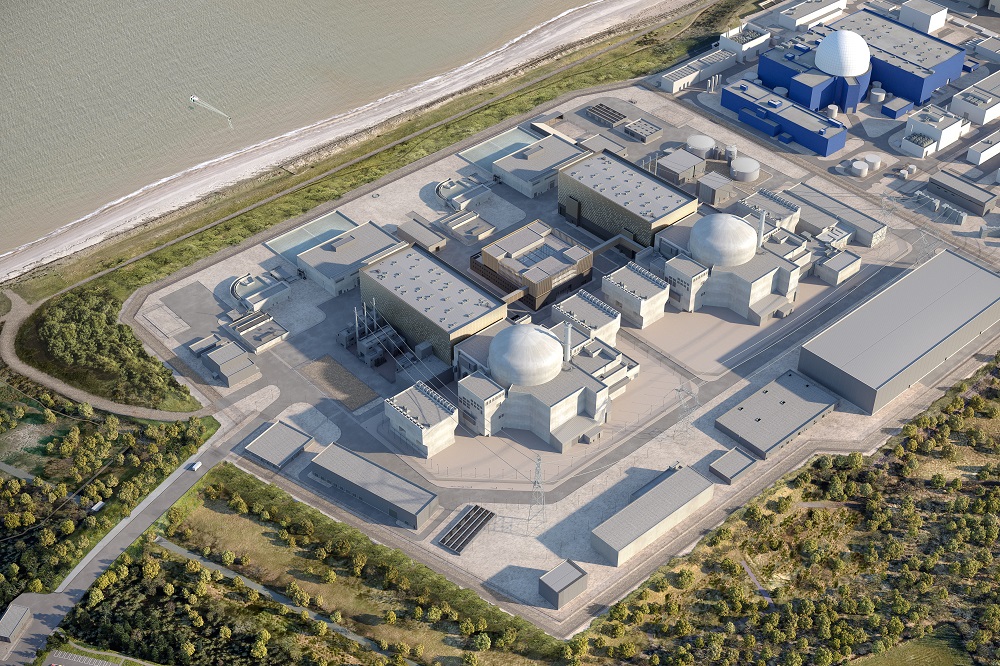
(Image: SIZEWELL C)
The concrete removed from Sizewell A undergoes crushing, grading, and quality certification in accordance with established standards such as the WRAP Quality Protocol. Once verified, these materials are designated as secondary aggregates suitable for use in new construction. More than 15,000 tonnes have already been incorporated into the foundation platforms at Sizewell C.
Within the European regulatory culture, such reuse is guided by principles of traceability, environmental integrity, and engineering safety. The Sizewell project demonstrates that recycled materials can meet stringent specifications without compromising construction quality.
Reusing material from a nearby site significantly reduces the need for new quarrying and long-distance aggregate transport. This leads to fewer heavy-vehicle movements through East Suffolk, mitigating congestion, reducing noise, and lowering associated emissions. These outcomes align with the UK’s and Europe’s broader climate objectives, particularly those focused on reducing embodied carbon in major infrastructure.
For local residents, the initiative provides tangible benefits beyond environmental performance. By reducing industrial transport and emphasizing open communication about project impacts, the programme aligns with Europe’s commitment to socially inclusive infrastructure planning.
The Sizewell initiative demonstrates a shift in how nuclear infrastructure is conceived across its full lifecycle:
Decommissioning and new-build phases are treated as interconnected, not isolated.
Environmental performance is considered an integral measure of engineering excellence.
Circular-economy principles are implemented through verifiable practices, not merely policy narratives.
This approach enhances both the economic efficiency and social legitimacy of nuclear development, offering a model that can be replicated across Europe’s evolving nuclear landscape.
With two EPR units planned, Sizewell C will provide long-term low-carbon power for the UK, while the decommissioning of Sizewell A continues toward completion later this century. The material-reuse partnership symbolizes a forward-looking engineering philosophy—one that prioritizes environmental stewardship, lifecycle efficiency, and community value.
In today’s European energy transition, such cross-project cooperation is more than a technical achievement; it reflects a renewed governance approach to nuclear infrastructure. Circularity becomes not merely a waste-reduction strategy, but a defining feature of sustainable nuclear development.